FOUNDATION LAID FOR THE ÇAMLIBEL TUNNEL TO STRENGTHEN TRANSPORTATION BETWEEN SIVAS AND TOKAT
The foundation of the Çamlıbel Tunnel, which will bypass 13 sharp bends between Sivas and Tokat, making transportation safer and faster, was laid on Sunday, July 5, 2026, with the participation of Minister of Transport and Infrastructure Abdulkadir Uraloğlu. The groundbreaking ceremony was attended by Director General of Highways Ahmet Gülşen, executives from public institutions and organizations, company representatives, and General Directorate of Highways personnel.
Speaking at the ceremony, Uraloğlu remarked that Türkiye had been rebuilt over the past 24 years, “We rebuild Türkiye throught investments in highway infrastructure. We constructed high-standard roads throughout our country. Our divided road which had a total length of 6,101 kilometers in 2002, has been expanded to 30,086 kilometers. Our motorway network, which stood at 1,714 kilometers, has increased to 3,796 kilometers. When only six provinces were connected by divided roads, today we have connected 77 provinces with safe and comfortable roads. While only 50 kilometers of tunnels had been constructed over the 80 years until 2002, we increased this by nearly 17 times to 868 kilometers. Do you know what this mean? It means that you could travel back and forth between the city centers of Sivas and Tokat four times without ever seeing daylight. We are talking about an underground road network stretching from Sivas to Bursa and from Tokat to Van." He said.
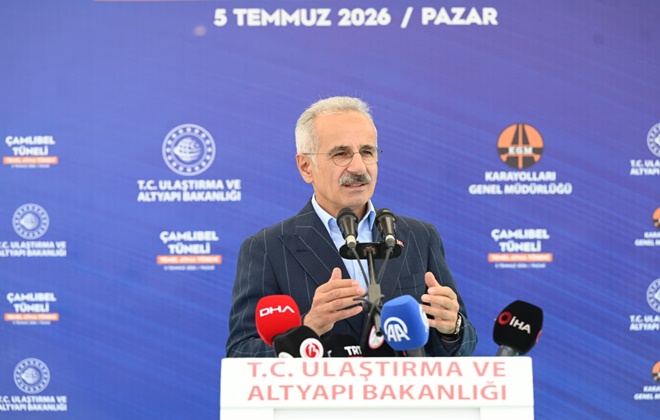
We invested 351 million lira in Tokat and Sivas
Uraloğlu; stated that the provinces of Sivas and Tokat are located at the intersection of the main routes connecting the Black Sea to Central Anatolia, Eastern Anatolia to Western Anatolia, and the Mediterranean to the Black Sea. He noted that these provinces play important roles in Türkiye's east-west and north-south transportation network, and therefore they attach great importance to the development of the transportation infrastructure and road networks of both provinces.
Minister Uraloğlu stated that they had invested 351 billion lira in Tokat and Sivas over the past 24 years and continued: "We have invested a total of 351 billion lira in the transportation and communication infrastructure of Tokat and Sivas. We increased the length of Tokat's divided roads from 16 kilometers to 311 kilometers, and the length of Sivas's divided roads from 24 kilometers to 838 kilometers. In Tokat, we completed projects such as the Turhal–Tokat, Tokat–Çamlıbel, Aybastı–Reşadiye, and Tokat Peripheral Roads. In Sivas, we delivered projects such as the Şarkışla–Kaynar, Hafik–Doğanşar, Sivas–Çamlıbel–Tokat, Koyulhisar–Mesudiye, and Kangal–Çetinkaya Junction–Divriği Road. We connected them to their neighboring provinces with divided roads."
Tunnel Project Extends 7.7 Kilometers, Including 3 Kilometers of Connecting Roads
Uraloğlu stated that the provinces of Sivas and Tokat are located at the intersection of the main transport corridors connecting the Black Sea to Central Anatolia, Eastern Anatolia to Western Anatolia, and the Mediterranean to the Black Sea. He noted that the two provinces play a vital role in Türkiye's east-west and north-south transportation network, emphasizing that they therefore attach great importance to the development of their transportation infrastructure and road networks. Minister Uraloğlu stated that 351 billion liras had been invested in Tokat and Sivas over the past 24 years and continued: “We have invested a total of 351 billion liras in the transportation and communication infrastructure of Tokat and Sivas. We increased the length of divided roads in Tokat from 16 kilometers to 311 kilometers, and in Sivas from 24 kilometers to 838 kilometers. In Tokat, we completed projects such as the Turhal–Tokat Road, Tokat–Çamlıbel Road, Aybastı–Reşadiye Road, and Tokat Peripheral Road. In Sivas, we implemented projects including the Şarkışla–Kaynar Road, Hafik–Doğanşar Road, Sivas–Çamlıbel–Tokat Road, Koyulhisar–Mesudiye Road, and the Kangal–Çetinkaya Junction–Divriği Road. We also connected both provinces to their neighboring provinces through divided roads."
Tunnel is part of a 7.7-kilometer project, including 3 kilometers of connecting roads
Stating that the Çamlıbel Tunnel, whose construction has begun in the region, will bring the two provinces closer together not only geographically but also by strengthening their social and transport links, Minister Uraloğlu shared the following details about the geography where the project will be implemented and the project itself: “Rising to an elevation of 1,684 meters, the Çamlıbel Pass, with its steep slopes and sharp bends, is known for its scorching summers and its snow, blizzards, and dense fog in winter. For many years, its harsh winter conditions, sharp curves, and steep gradients have challenged drivers, unfortunately claimed lives on occasion, and slowed trade by increasing travel times. It is a place where nature presents one of its toughest challenges, almost like a mountain gateway that refuses to let travelers pass. By constructing our 4,735-meter-long Çamlıbel Tunnel, we will overcome this difficult terrain shaped by steep mountainsides and transform it into a safe, smooth, and comfortable route. The arduous journeys through this region will soon become a thing of the past. In fact, our tunnel, which will be built as a twin-tube tunnel, is part of a 7.7-kilometer project, including 3 kilometers of connecting roads. The project will begin near Ilıca Reservoir at the 9th kilometer of the Yıldızeli–Sivas Junction, Tokat Road and connect to the vicinity of İhsaniye Reservoir at the 19th kilometer. With the completion of the tunnel, we will lower the route elevation by 286 meters, from 1,684 meters to 1,398 meters, bypass 13 sharp bends, shorten the route by 2.3 kilometers, and reduce travel time to 5 minutes."
Annual Savings of 371 Million Liras to Be Achieved
Emphasizing that the Çamlıbel Tunnel is expected to generate annual savings of approximately 371 million liras, Minister Uraloğlu said: “The project will deliver annual savings totaling 371 million liras, including 313 million liras from reduced travel time and 58 million liras from lower fuel consumption. We will also reduce carbon emissions by 2,794 tons annually, helping preserve the unique natural environment of Sivas and Tokat.
Once the tunnel is completed, we will enhance the standard of transportation between Sivas and the inland regions and the Black Sea coast and its ports. By reducing logistics costs throughout the region, particularly in Sivas and Tokat, we will increase trade volume, stimulate tourism, and enable agricultural products to reach markets more quickly, making a significant contribution to the regional economy."
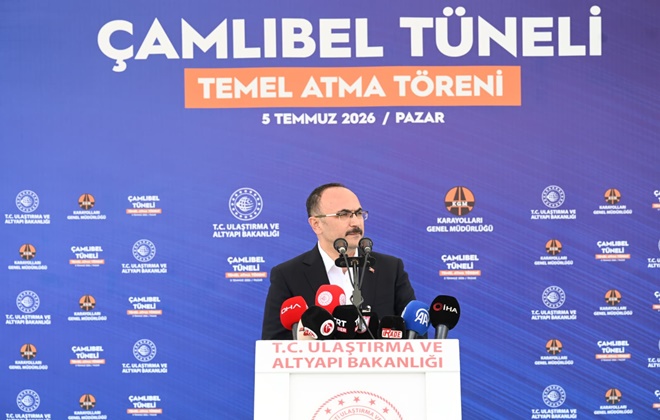
The Çamlıbel Tunnel Will Form Another Key Link in the Transportation Network
Speaking at the groundbreaking ceremony, General Director of Highways Ahmet Gülşen said, “As the General Directorate of Highways, we are resolutely continuing our investments to further enhance Türkiye's transportation network, which enables the sustainable continuation of production, trade, and daily life."
Gülşen stated that they were proud to launch the construction of the 4,735-meter twin-tube Çamlıbel Tunnel, which will enable the Çamlıbel Pass on the Sivas–Tokat route where the transportation network was upgraded to divided road standards years ago to be traversed with the comfort of a tunnel.
Gülşen emphasized that every road, bridge, and tunnel they have built to establish a modern transportation infrastructure across the country has made people's lives easier and brought cities closer together. He added that the Çamlıbel Tunnel represents another important link in this vision.
Following the speeches, the groundbreaking ceremony continued with the launch of the first excavation works at the tunnel entrance.

