THE 2ND MINISTERIAL CONFERENCE ON TRANSPORT OF THE ORGANIZATION OF ISLAMIC COOPERATION WAS HELD
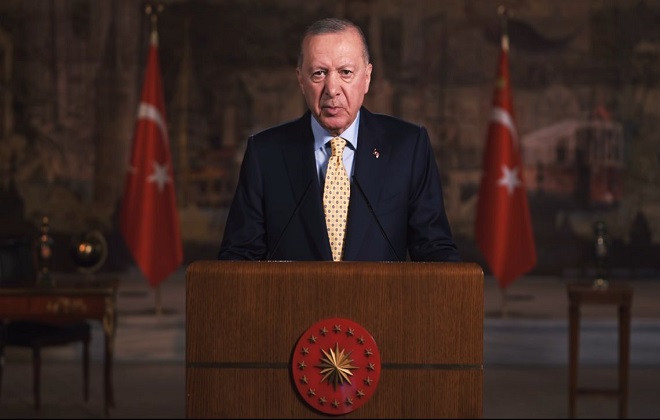
The 2nd Ministerial Conference on Transport of the Organisation of Islamic Cooperation (OIC), to which President Recep Tayyip Erdoğan delivered a video message, was held under the chairmanship of Minister of Transport and Infrastructure Abdulkadir Uraloğlu, with the participation of ministers from OIC Member States.
There is a Need for Reliable, Integrated, Effective a Transportation Network to Transform Geographical Advantages into Strategic Strength
Emphasizing that we are undergoing a process in which geographical distances have lost their importance, while strategic connections have gained unprecedented value, Erdoğan added: 'The first conference on transport of Organization of Islamic Cooperation was held approximately 40 years ago. In this process, the world economy, trade routes, production hubs, and transport technologies have also undergone a profound transformation. Transport has become not only a means of facilitating the movement of goods and people but also a fundamental element of development, competitiveness, and regional integration. Spanning from Asia to Africa and from Europe to the Middle East, the Islamic world commands natural corridors, a dynamic and young population, and rapidly growing markets across this vast geography. However, to fully realize this great potential and transform geographical advantages into strategic strength, effective, reliable, and integrated transport networks are needed.'
Global Trade Routes have been Fortified
President Recep Tayyip Erdoğan emphasized that robust connectivity among roads, railways, ports, and airports would enhance not only trade among Islamic countries but also social and cultural interaction. He noted that Türkiye has sought to translate this vision into concrete action through large-scale transport projects implemented in recent years, adding that global trade routes have been reinforced through projects such as Marmaray, Avrasya Tunnel, 1915 Çanakkale Bridge, and Yavuz Sultan Selim Bridge.
Erdoğan underlined that, throught their support for the Trans-Caspian East-West Middle Corridor Initiative, they have revitalized the historic Silk Road with a modern vision, stressed that they have not utilized the investments solely at the national level. He stated that their objective is to strengthen integration with Member States of the Organisation of Islamic Cooperation (OIC), to develop cross-border corridors, and to generate added value through joint projects.
President Recep Tayyip Erdoğan stated that significant steps had been taken as a result of the constructive deliberations held throughout the Conference. He announced that important decisions were adopted to formulate a roadmap aimed at strengthening transport links among Member States, enhancing solidarity on international platforms, and preparing a Transport Connectivity Strategy Document under Türkiye's chairmanship. President Recep Tayyip Erdoğan emphasized that, for the effective implementation of the decisions taken, it is crucial that technical meetings are held without interruption and that follow-up mechanisms are operated diligently. He noted that the collective will demonstrated would pave the way for the advancement of this process. President Recep Tayyip Erdoğan highlighted that, for the effective implementation of the decisions taken, it is essential that technical meetings are conducted without interruption and that follow-up mechanisms are operated meticulously. He noted that the collective will demonstrated would pave the way for the advancement of this process.
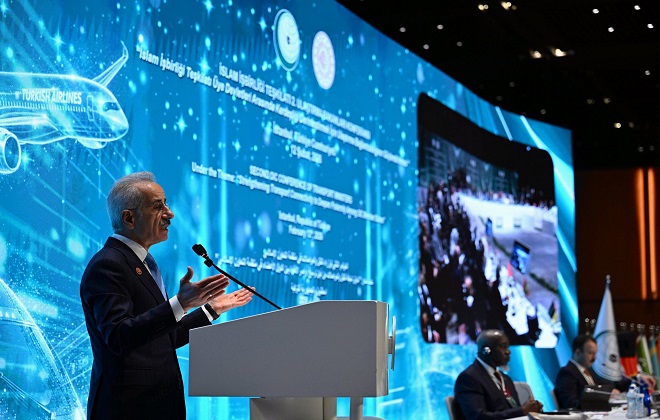
Speaking at the 2nd Ministerial Conference on Transport of the Organisation of Islamic Cooperation (OIC), Minister of Transport and Infrastructure Abdulkadir Uraloğlu stated, 'Transport is also one of the pillars of humanitarian solidarity and collective resilience against crises,' noting that over the past approximately 40 years, the world economy, trade routes, production hubs, and transport technologies have undergone a profound transformation. He added, 'This transformation has made cooperation in the field of transport more strategic than ever. The collaboration we conduct under the OIC framework represents an important platform that strengthens solidarity and mutual trust among Member States.'
Emphasizing that a road is not merely a physical infrastructure, Minister Abdulkadir Uraloğlu stated: 'A road represents integration with the world. It enables production to reach markets, allows trade to flow freely, and strengthens the bonds between societies. This understanding has formed the foundation of the transport policies we have implemented over the past more than twenty years. Within this framework, Türkiye, with its strategic geographical location, advanced infrastructure, and multimodal logistics capacity, has today become one of the indispensable hubs of global trade.'
Strengthening Interregional Connectivity
Abdulkadir Uraloğlu stated that Türkiye aims to diversify its transportation corridors and made the following remarks: 'By accurately interpreting this new global landscape, we aim to diversify transportation corridors, make supply chains more resilient, and strengthen interregional connectivity. The Middle Corridor, which we have developed with this vision, stands out as one of the shortest, safest, most predictable, and most cost-efficient routes between Asia and Europe. The Development Road Project envisages the establishment of a new east–west and north–south transport connectivity corridor stretching from the Persian Gulf to Europe through Türkiye. This project will create a continuous road and rail link between the Middle East and Europe, reducing transportation times and cutting costs. As Türkiye, we believe it is appropriate to view this and similar corridor initiatives not as competitive, but as projects based on complementarity, aiming to enhance regional prosperity, stability, and economic integration.'
New Steps in Transport within the Framework of the OIC
Abdulkadir Uraloğlu highlighted that, in addition to the corridors between Asia and Europe, concrete initiatives are also being carried out with the African continent. He noted that at the Global Transport Corridors Forum held in İstanbul last June, memoranda of understanding were signed with seven African countries, emphasizing that the effectiveness of transport corridors cannot be limited to infrastructure investments alone. He emphasized that cooperation in the transport sector should first be transferred to a more structured and results-oriented framework within the OIC, that capacities need to be clearly defined, and that the primary requirement is moving from intentions to implementation, and from declarations to tangible impact.
Abdulkadir Uraloğlu recalled that the 1st OIC Transport Ministers Conference was held in İstanbul from 7 to 10 September 1987. He noted that the final report clearly highlighted the need for an international structure under the OIC focusing on land transport. Abdulkadir Uraloğlu stated that the strategic role of land transport in the global transportation system has become increasingly evident, and that the need for institutional cooperation in this sector is felt far more strongly compared to other modes of transport. He added: 'Based on the decision we took in 1987, I propose that all necessary steps be taken by Türkiye, in its capacity as Chair of the 2nd OIC Transport Ministers Conference, to establish a specialized institution under the OIC in Türkiye called the Land Transport Centre, and to lay the groundwork for a global framework in land transport within the scope of the document submitted to the United Nations by Türkiye. I further propose that the necessary documents be prepared in coordination with the General Secretariat and submitted to the 3rd OIC Transport Ministers Conference scheduled for 2028.'

